

[et_pb_section fb_built=”1″ admin_label=”Header” _builder_version=”4.9.7″ background_color=”#FFFFFF” use_background_color_gradient=”on” background_color_gradient_start=”rgba(206,206,206,0.92)” background_color_gradient_end=”rgba(221,221,221,0.9)” background_color_gradient_direction=”125deg” background_image=”https://quisalute.online/wp-content/uploads/2021/07/IMG-3419-scaled.jpg” background_blend=”multiply” custom_padding=”10vw||63px||false|false” locked=”off”][et_pb_row _builder_version=”4.4.7″][et_pb_column type=”4_4″ _builder_version=”3.25.1″][et_pb_text _builder_version=”4.9.7″ text_text_color=”#FFFFFF” header_font=”Alata||||||||” header_text_color=”#FFFFFF” header_font_size=”100px” header_line_height=”1.2em” header_2_font=”DM Sans|700||on|||||” header_2_text_color=”#EDF000″ header_2_font_size=”14px” header_2_letter_spacing=”6px” header_2_line_height=”1.4em” header_4_font=”Actor||||||||” header_4_text_color=”#EDF000″ max_width=”800px” max_width_phone=”300px” max_width_last_edited=”off|desktop” header_font_size_tablet=”50px” header_font_size_phone=”35px” header_font_size_last_edited=”on|phone” header_2_font_size_tablet=”14px” header_2_font_size_phone=”12px” header_2_font_size_last_edited=”on|desktop” header_text_shadow_style=”preset3″ header_text_shadow_color=”RGBA(0,0,0,0)”]
ricetta
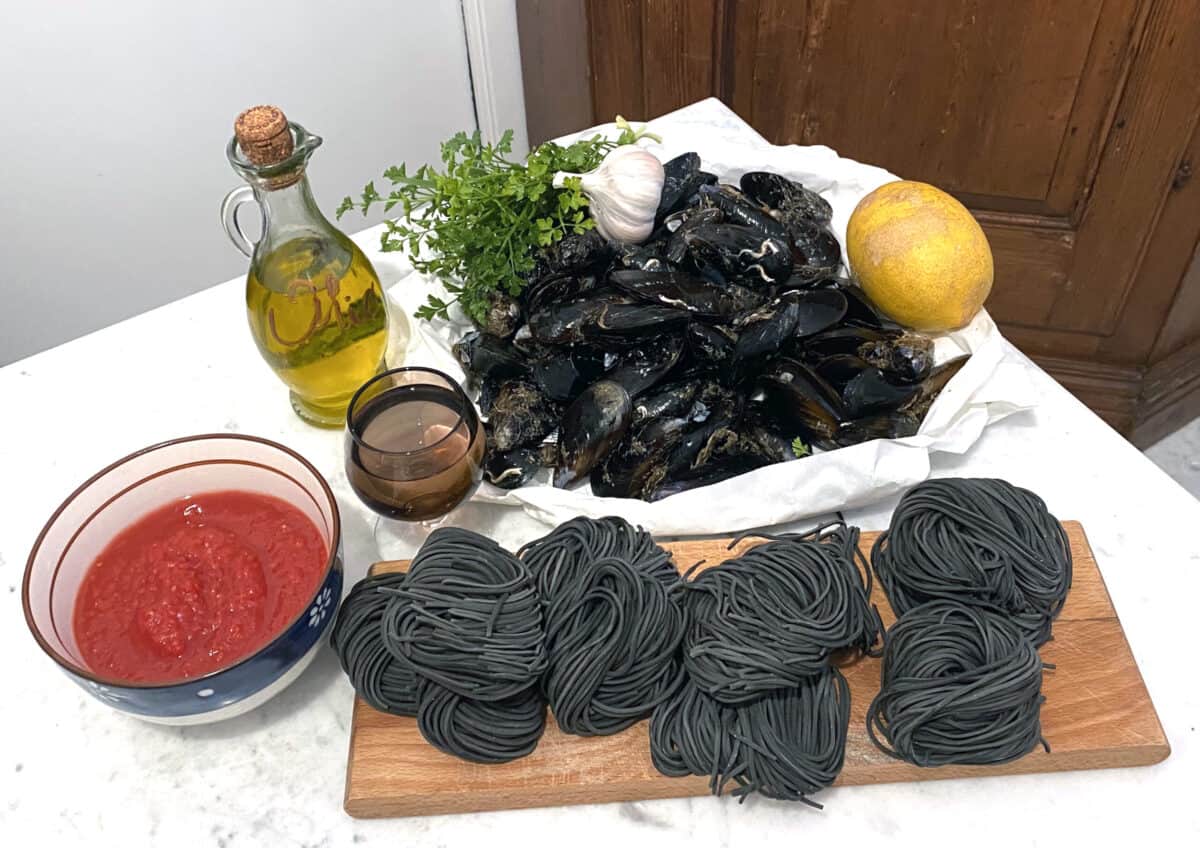
Tagliolini al nero di seppia con sugo di muscoli
(ricordo che in Liguria, come nei paesi anglofoni, le cozze si chiamano muscoli).
Antica ricetta di famiglia della mia bisnonna Caterina Bozzo di Voltri (Ge).
[/et_pb_text][/et_pb_column][/et_pb_row][/et_pb_section][et_pb_section fb_built=”1″ _builder_version=”4.9.4″ _module_preset=”default” custom_padding=”50px||43px||false|”][et_pb_row column_structure=”1_2,1_2″ disabled_on=”on|off|off” _builder_version=”4.9.4″ _module_preset=”default” custom_padding=”0px||0px||true|”][et_pb_column type=”1_2″ _builder_version=”4.5.0″ _module_preset=”default”][et_pb_image src=”https://quisalute.online/wp-content/uploads/2021/07/three-fresh-mussels-close-up-on-a-white-background-2LJB3XN-1-scaled.jpg” title_text=”three-fresh-mussels-close-up-on-a-white-background-2LJB3XN (1)” _builder_version=”4.9.7″ _module_preset=”default” locked=”off”][/et_pb_image][/et_pb_column][et_pb_column type=”1_2″ _builder_version=”4.5.0″ _module_preset=”default”][et_pb_text _builder_version=”4.9.7″ text_line_height=”2.5em” header_2_font=”Alata||||||||” header_2_font_size=”60px” header_2_line_height=”1.2em” width=”100%” custom_margin=”8px|||||” text_font_size_tablet=”14px” text_font_size_last_edited=”off|desktop” header_2_font_size_tablet=”40px” header_2_font_size_phone=”30px” header_2_font_size_last_edited=”on|tablet” locked=”off”]
ingredienti
PER 4 PERSONE
- 500 gr tagliolini freschi al nero di seppia
- 2 kg cozze
- 1 spicchio d’aglio
- 1 filettino d’acciuga
- 1 bicchiere di vino bianco secco
- prezzemolo q.b.
- 400 gr polpa di pomodoro
Piatto completo e gustoso. Iniziare il pasto sempre con una porzione di verdura cruda di stagione.
Cozze: proteine nobili, poco caloriche, proprietà antiossidanti, contengono ferro con ottima bio disponibilità intestinale, contengono iodio, sodio, zinco e potassio, a basso contenuto di grassi sono adatte per chi segue un’alimentazione ipocalorica. Hanno anche proprietà antinfiammatorie. 86kcal per 100 grammi.
[/et_pb_text][/et_pb_column][/et_pb_row][et_pb_row column_structure=”1_2,1_2″ disabled_on=”off|on|on” _builder_version=”4.9.4″ _module_preset=”default” custom_padding=”0px||0px||true|”][et_pb_column type=”1_2″ _builder_version=”4.5.0″ _module_preset=”default”][et_pb_text _builder_version=”4.9.7″ text_line_height=”2.5em” header_2_font=”Alata||||||||” header_2_font_size=”60px” header_2_line_height=”1.2em” width=”100%” custom_margin=”8px|||||” text_font_size_tablet=”14px” text_font_size_last_edited=”off|desktop” header_2_font_size_tablet=”40px” header_2_font_size_phone=”30px” header_2_font_size_last_edited=”on|tablet” locked=”off”]
ingredienti
PER 4 PERSONE
- 500 gr tagliolini freschi al nero di seppia
- 2 kg cozze
- 1 spicchio d’aglio
- 1 filettino d’acciuga
- 1 bicchiere di vino bianco secco
- prezzemolo q.b.
- 400 gr polpa di pomodoro
Piatto completo e gustoso. Iniziare il pasto sempre con una porzione di verdura cruda di stagione.
Cozze: proteine nobili, poco caloriche, proprietà antiossidanti, contengono ferro con ottima bio disponibilità intestinale, contengono iodio, sodio, zinco e potassio, a basso contenuto di grassi sono adatte per chi segue un’alimentazione ipocalorica. Hanno anche proprietà antinfiammatorie. 86kcal per 100 grammi.
[/et_pb_text][et_pb_image src=”https://quisalute.online/wp-content/uploads/2021/07/three-fresh-mussels-close-up-on-a-white-background-2LJB3XN-1-scaled-e1625132634738.jpg” title_text=”three-fresh-mussels-close-up-on-a-white-background-2LJB3XN (1)” _builder_version=”4.9.7″ _module_preset=”default” locked=”off”][/et_pb_image][/et_pb_column][et_pb_column type=”1_2″ _builder_version=”4.5.0″ _module_preset=”default”][/et_pb_column][/et_pb_row][/et_pb_section][et_pb_section fb_built=”1″ admin_label=”Classes” _builder_version=”4.9.7″ _module_preset=”default” background_color=”#a53f00″ background_color_gradient_direction=”155deg” background_enable_image=”off” background_size=”initial” background_position=”top_right” custom_padding=”||45px|||”][et_pb_row _builder_version=”4.5.0″ _module_preset=”default”][et_pb_column type=”4_4″ _builder_version=”4.5.0″ _module_preset=”default”][et_pb_text _builder_version=”4.5.0″ header_2_font=”Alata||||||||” header_2_font_size=”60px” header_2_line_height=”1.2em” background_layout=”dark” custom_margin=”||0px|||” header_2_font_size_tablet=”40px” header_2_font_size_phone=”30px” header_2_font_size_last_edited=”on|phone” locked=”off”]
Preparazione
[/et_pb_text][/et_pb_column][/et_pb_row][et_pb_row column_structure=”1_3,1_3,1_3″ use_custom_gutter=”on” gutter_width=”2″ make_equal=”on” _builder_version=”4.9.4″ _module_preset=”default” custom_margin=”40px||||false|false” custom_margin_tablet=”0px||||false|false” custom_margin_phone=”” custom_margin_last_edited=”on|tablet” border_radii=”on|14px|14px|14px|14px”][et_pb_column type=”1_3″ _builder_version=”4.5.1″ _module_preset=”default” background_color=”#ffffff” custom_padding=”20px|20px|20px|20px|true|true”][et_pb_text _builder_version=”4.9.7″ header_3_font=”Alata||||||||” header_3_text_color=”#2B343B” header_3_font_size=”20px” header_3_line_height=”1.4em” text_font_size_tablet=”14px” text_font_size_last_edited=”off|desktop” header_3_font_size_tablet=”18px” header_3_font_size_phone=”” header_3_font_size_last_edited=”on|phone” locked=”off”]
1
Pulire le cozze, metterle ad aprire in un tegame sul fuoco, appena aperte eliminare tutti i gusci e tenere da parte l’acqua di cottura e filtrarla.
[/et_pb_text][/et_pb_column][et_pb_column type=”1_3″ _builder_version=”4.5.0″ _module_preset=”default” background_color=”#ffffff” custom_padding=”20px|20px|20px|20px|true|true”][et_pb_text _builder_version=”4.9.7″ header_3_font=”Alata||||||||” header_3_text_color=”#2B343B” header_3_font_size=”20px” header_3_line_height=”1.4em” text_font_size_tablet=”14px” text_font_size_last_edited=”off|desktop” header_3_font_size_tablet=”18px” header_3_font_size_phone=”” header_3_font_size_last_edited=”on|phone” locked=”off”]
2
In una casseruola imbiondire uno spicchio d’aglio, aggiungere un cucchiaio di prezzemolo tritato l’acciuga e le cozze tritate grossolanamente lasciandone qualcuna intera a piacere.
[/et_pb_text][/et_pb_column][et_pb_column type=”1_3″ _builder_version=”4.5.0″ _module_preset=”default” background_color=”#ffffff” custom_padding=”20px|20px|20px|20px|true|true”][et_pb_text _builder_version=”4.9.7″ header_3_font=”Alata||||||||” header_3_text_color=”#2B343B” header_3_font_size=”20px” header_3_line_height=”1.4em” text_font_size_tablet=”14px” text_font_size_last_edited=”off|desktop” header_3_font_size_tablet=”18px” header_3_font_size_phone=”” header_3_font_size_last_edited=”on|phone” locked=”off”]
3
Sfumare con il vino, aggiungere la polpa di pomodoro e 2/3 mestolini di acqua di cottura delle cozze e cuocere per 20 minuti circa. La rimanente acqua di cottura va aggiunta all’acqua per cuocere la pasta (si utilizza tutto!).
[/et_pb_text][/et_pb_column][/et_pb_row][et_pb_row column_structure=”1_3,1_3,1_3″ use_custom_gutter=”on” gutter_width=”2″ make_equal=”on” _builder_version=”4.9.4″ _module_preset=”default” custom_margin=”1px|auto||auto|false|false” custom_margin_tablet=”0px||||false|false” custom_margin_phone=”” custom_margin_last_edited=”on|tablet” custom_padding=”3px|||||”][et_pb_column type=”1_3″ _builder_version=”4.5.1″ _module_preset=”default” background_color=”#ffffff” custom_padding=”20px|20px|20px|20px|true|true”][et_pb_text _builder_version=”4.9.7″ header_3_font=”Alata||||||||” header_3_text_color=”#2B343B” header_3_font_size=”20px” header_3_line_height=”1.4em” text_font_size_tablet=”14px” text_font_size_last_edited=”off|desktop” header_3_font_size_tablet=”18px” header_3_font_size_phone=”” header_3_font_size_last_edited=”on|phone” locked=”off”]
4
Cuocere i tagliolini nell’acqua bollente, scolare e saltare nel condimento. Servire caldo e aggiungere a piacere una spolverata di pepe.
[/et_pb_text][/et_pb_column][et_pb_column type=”1_3″ disabled_on=”on|on|on” _builder_version=”4.9.4″ _module_preset=”default” background_color=”RGBA(0,0,0,0)” custom_padding=”20px|20px|20px|20px|true|true” disabled=”on”][/et_pb_column][et_pb_column type=”1_3″ disabled_on=”on|on|on” _builder_version=”4.9.4″ _module_preset=”default” background_enable_color=”off” custom_padding=”20px|20px|20px|20px|true|true” disabled=”on”][/et_pb_column][/et_pb_row][et_pb_row _builder_version=”4.9.4″ _module_preset=”default”][et_pb_column type=”4_4″ _builder_version=”4.9.4″ _module_preset=”default”][et_pb_text _builder_version=”4.9.4″ _module_preset=”default” text_font=”Allura||||||||” text_text_color=”#FFFFFF” text_font_size=”32px” text_orientation=”center”]
Clelia Iacoviello
[/et_pb_text][/et_pb_column][/et_pb_row][/et_pb_section][et_pb_section fb_built=”1″ admin_label=”Testimonials” _builder_version=”4.5.0″ background_enable_color=”off” custom_padding=”61px|||||” locked=”off”][et_pb_row _builder_version=”4.4.7″][et_pb_column type=”4_4″ _builder_version=”3.25.1″][et_pb_slider dot_nav_custom_color=”#000000″ _builder_version=”4.9.7″ _module_preset=”default” background_color=”rgba(0,0,0,0)” custom_margin=”|||||true” custom_padding=”31px||31px||true|false”][et_pb_slide _builder_version=”4.9.7″ _module_preset=”default” header_level=”h1″ body_font=”Alata||||||||” body_font_size=”40px” body_line_height=”1.4em” background_enable_color=”off” background_layout=”light” body_font_size_tablet=”30px” body_font_size_phone=”24px” body_font_size_last_edited=”on|phone” inline_fonts=”Alex Brush,Allura” sticky_transition=”on”]
“Le cozze sono gli orecchini delle rocce.”
Ramón Gómez de la Serna
[/et_pb_slide][/et_pb_slider][/et_pb_column][/et_pb_row][/et_pb_section]